
SEO · 4 min read
Bing AI citations doubled. Why didn't website visits rise?
Compare page-level citations and classified sessions without treating them as a click-through rate.
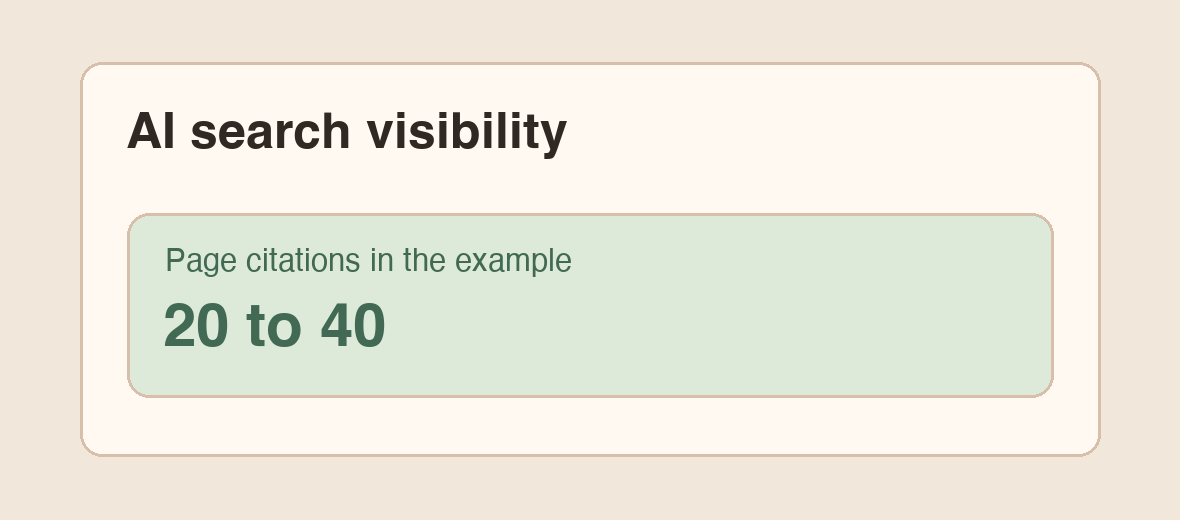
Compare the same site and complete reporting dates. Bing AI Performance counts citations across supported experiences. GA4 counts recorded sessions and classifies how they arrived. A citation may receive no clicks, and a visit may arrive without a recognizable source. Read the two series separately.
Compare the two series for the same page
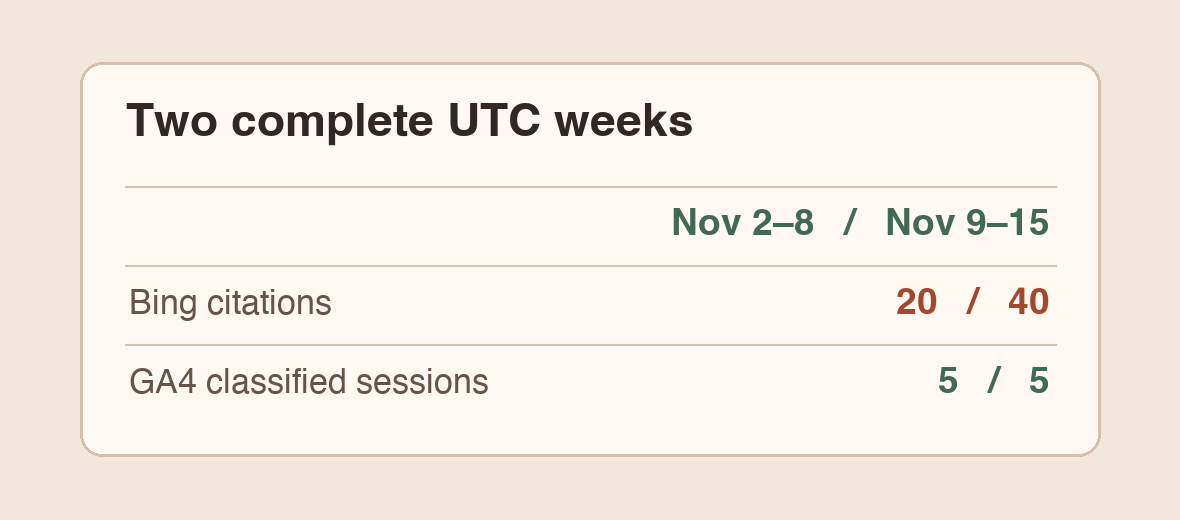
| Fictional UTC period | Bing citations for page P | Classified sessions landing on P |
|---|---|---|
| Nov 2–8 | 20 | 5 |
| Nov 9–15 | 40 | 5 |
Citations rose by 20 and sessions stayed at 5. Dividing 5 by 40 gives 12.5%, but the reports do not match individual clicks to citation impressions, so this is not citation CTR.
Trace the cited URL to the landing page
Match the cited URL to the actual landing URL, including language paths, parameters and redirects. Save each report's dates, property and filters. If time zones differ, compare complete overlapping days. Review classified referrals alongside direct and unclassified traffic. A rise in direct traffic alone cannot identify its source.
If visits stay flat, check whether the answer already solves the reader's task. Add a reason to visit only when it serves that task, such as a calculator the answer cannot run. Repeat the measurement using the same definitions and keep business outcomes separate.